
Article: A Sweet Taste of the Past – The Story of Hadji Bey’s Armenian Delight
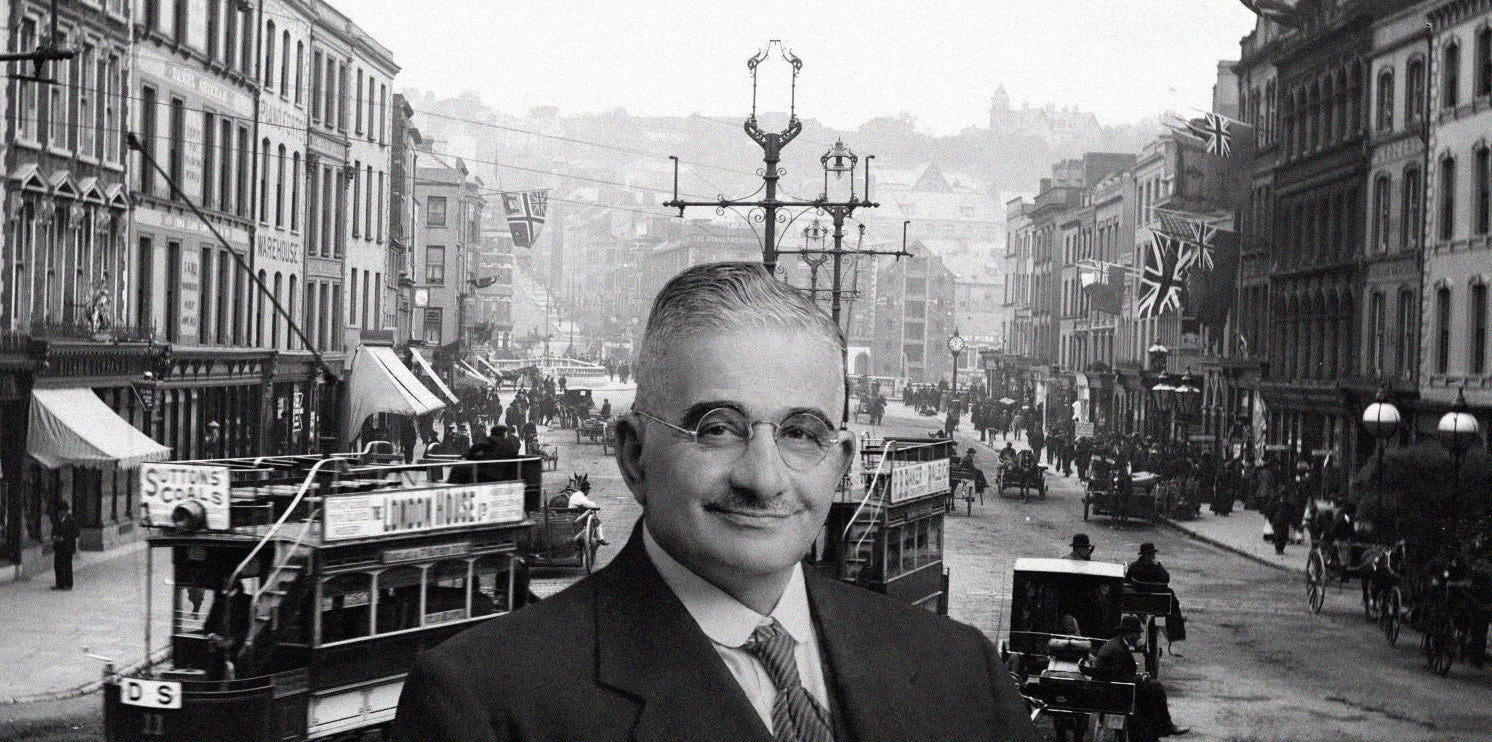
A Sweet Taste of the Past – The Story of Hadji Bey’s Armenian Delight
In the early years of the twentieth century, an unlikely delicacy took root in the city of Cork, Ireland, and quietly became part of the city’s cultural fabric.
Hadji Bey’s Lokhum — soft, fragrant, and unlike anything most Irish people had tasted before — arrived not through empire or trade routes, but through migration, survival, and craft.
Behind it was Harutun Batmazian, an Armenian whose journey from the Ottoman Empire to Ireland left a lasting imprint on Irish confectionery history.

Harutun Batmazian, circa 1920
Harutun Batmazian was born in the Ottoman Empire and educated in Constantinople, where he studied law. In his spare time, he worked at Hadji Bekir, a Constantinople confectioner founded in 1777, which still exists today.

Like many Armenians of his generation, his life was shaped by rising persecution and instability. Seeking safety and opportunity, Harutun and his wife Esther left the region and settled first in London.
Their fortunes changed in 1902, when Harutun brought his handmade lokhum, known colloquially in English as "Turkish Delight", to the Great Cork International Exhibition.
The response was immediate and enthusiastic. Cork, it seemed, had an appetite for something new.

Great Cork International Exhibition, 1902
Encouraged by the reception, the Batmazians settled permanently in the city and established Hadji Bey’s, a name chosen to evoke the elegance and mystique of the East.
“God be in my hands and in my making.”
From a small shop and factory, Harutun produced Lokhum / Turkish Delight using traditional methods — sugar, starch, and carefully balanced flavourings; oils from Sicily and Florida. For many Cork people, it was their first taste of something truly exotic.

Harutun Batmazian's shop, Cork, Ireland, 1910
Inside the Hadji Bey shop, amid the scent of sugar and rosewater, hung a modest sign bearing Harutun’s guiding words: “God be in my hands and in my making.”
It was a quiet statement of intent — a reminder that his work, faith, and responsibility were inseparable.
"Sold through prestigious retailers including Harrods in London and Macy’s and Bloomingdale’s in New York, and it was even supplied to Buckingham Palace."

Original tin packaging
Hadji Bey’s reputation quickly spread beyond Cork. The Turkish delight was sold through prestigious retailers including Harrods in London and Macy’s and Bloomingdale’s in New York, and it was even supplied to Buckingham Palace. Despite this international success, the business remained deeply rooted in Cork. Harutun and Esther raised their family there, and the shop became a familiar fixture in the city — remembered by many as an Aladdin’s cave of colour, scent, and indulgence.
"Live and Let Live"
The family’s life in Ireland, however, was not without hardship. During World War I, anti-Turkish sentiment surged across Britain and Ireland because the Ottoman Empire was on the opposing side of the conflict.
Despite being Armenian Christians who had fled Ottoman persecution, the Batmazians were wrongly identified with Turkey because of the product they made. Their premises were attacked and burned.
In response, Harutun issued an open letter titled Live and Let Live, explaining his background and calling for understanding rather than hatred.

The business was rebuilt on McCurtain Street, and Hadji Bey’s continued to trade successfully for decades. Harutun’s son Edward eventually took over the operation, guiding it through the mid-twentieth century. After his retirement in the early 1970s, the business entered a period of decline, and by the late 1980s production in Cork had ceased. Yet the memory of Hadji Bey never disappeared. For many Irish people, especially in Cork, Hadji Bey Turkish delight remained a powerful symbol of childhood, celebration, and Christmas tradition.
That sense of nostalgia eventually led to the brand’s revival in the 2010s, when production resumed in Ireland under new ownership with the original recipes, with a renewed emphasis on its history and origins.
Hadji Bey’s story offers a small but clear example of how immigrant skill and local custom combined to shape ordinary habits, leaving behind something that felt, in the end, simply part of home.
────୨ৎ────
AVAILABLE NOW: HADJI BEY'S LOKHUM - IMPORTED FROM IRELAND.
Treat Yourself to a Piece of Armenian History
SHOP NOW



Leave a comment
This site is protected by hCaptcha and the hCaptcha Privacy Policy and Terms of Service apply.